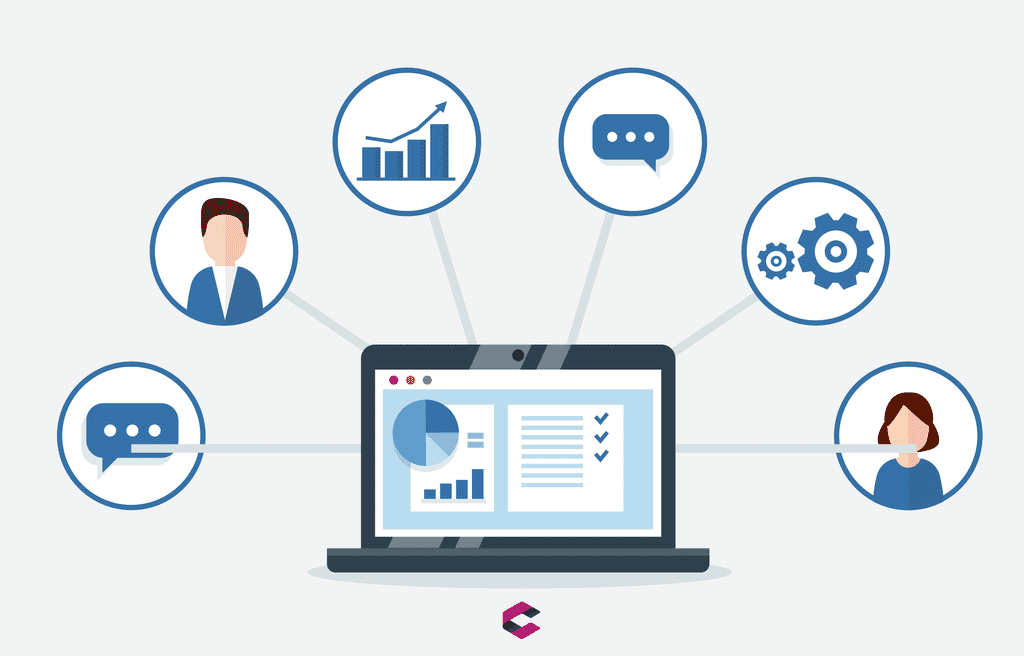
At Cadspec, we work with manufacturing, engineering and construction businesses looking to improve efficiency, connect their systems and make better use of their data. In many cases, their biggest challenges are not a lack of technology. It is that valuable information has become trapped across different platforms, departments and processes.
The result is a business where people spend more time searching for information, managing documents and resolving inconsistencies than focusing on delivering value. The good news is that with the right approach, data silos can be reduced and businesses can create more connected, efficient ways of working.
What are data silos and why do they happen?
A data silo occurs when information is stored separately from the people, systems or teams that need to access it. This could be a spreadsheet maintained by one department, documents stored on a shared drive, information held within a specialist application or data sitting within a legacy system that cannot communicate with newer platforms. The information itself is not necessarily incorrect, the problem is that it is isolated.
Data silos rarely appear overnight, they usually develop gradually as businesses grow and introduce new tools to solve specific challenges. One team may create a spreadsheet to manage a process more efficiently, another may introduce separate software for a different requirement and an older system may remain in place because replacing it feels too disruptive. Each decision may have made sense at the time. However, over the years, these individual solutions can create fragmented processes where information no longer flows naturally through the business. Employees then find themselves manually transferring data, checking document revisions, duplicating information and creating workarounds simply to keep projects moving.
How disconnected data affects operational efficiency
Data silos are often viewed as a technology issue, but the impact is much broader, they affect productivity, communication, decision making and the overall performance of a business. For engineering and manufacturing organisations, small inefficiencies can quickly become costly; an engineer may spend time searching for the latest drawing before starting work, a production team may pause a job while waiting for updated documentation, a sales team may create a quotation using information that is no longer current.
These delays do not happen because people are not working effectively. They happen because the right information is not available when it is needed. As businesses scale, these challenges become harder to ignore. Disconnected systems can lead to:
- Duplicate information across multiple platforms
- Conflicting versions of documents
- Increased administration and manual tasks
- Delays in decision making
- Reduced visibility across projects
- Greater risk of costly mistakes
Perhaps most importantly, isolated information makes collaboration more difficult. When teams are working from different versions of the truth, it becomes harder to make confident decisions and deliver consistent results.
Why technology alone, won’t solve data silos
It is easy to assume that investing in new software will solve operational challenges. In our experience, that is rarely the case, the real value comes from understanding how information moves through your business before deciding which technology is right. We have worked with organisations using excellent software that still experience inefficiencies because their business processes have not evolved alongside their technology. Equally, we have seen businesses continue to use older systems successfully because they have well-defined workflows and processes in place. The difference is not always the software itself, it is how effectively people, processes and connected systems work together. A successful digital transformation starts with understanding how your organisation operates today, identifying where information becomes disconnected and then selecting solutions that support improvement.
How to identify opportunities to improve your business processes
Before introducing new technology, businesses should take time to understand their current workflows.
Ask questions such as:
- Where is information created?
- Who needs access to it?
- How does it move between departments?
- Where is data entered manually?
- How are document revisions managed?
- Which processes create delays?
These questions often highlight inefficiencies that are difficult to see from within a single department. A process may appear fully digital in one area of the business, while another team is still relying on spreadsheets, manual updates or email communication to complete the same workflow, by mapping how information moves through the organisation, businesses can identify where connected systems, improved document management or workflow automation could create real value.
Three ways to prevent data silos
1. Consider the whole business, not individual departments
- Every department is connected.
- Sales information influences engineering decisions, engineering data supports manufacturing, and manufacturing relies on accurate procurement information. Project teams depend on visibility from across the organisation.
- When improving technology and processes, businesses should look beyond individual departments and consider how information needs to flow throughout the entire operation.
- The goal is not simply to improve one task, it is to create a connected business where information moves efficiently from one stage of a project to the next.
2. Review existing systems and processes
- Legacy systems are not automatically a problem, many contain valuable business knowledge and important historical information, the key question is whether they still support the way your business operates today.
- Can they integrate with newer platforms? Are they helping teams work efficiently? Or are they creating additional manual processes?
- In some cases, integration is the right approach – in others, modernisation or a phased migration may be more suitable.
- The important thing is making decisions based on business objectives, rather than replacing technology simply because it is old.
3. Involve the people using the systems every day
- The people closest to your processes often have the clearest understanding of where improvements can be made.
- They know which spreadsheets have become essential, where approvals slow projects down and which manual tasks take up valuable time.
- Speaking with teams across the business provides insight that cannot always be found through a technical review alone.
- Understanding these challenges helps create solutions that work in practice, not just on paper.
The business benefits of connected data
Breaking down data silos is not just about making information easier to find, it’s about helping your business operate more effectively. When teams have access to accurate information at the right time, collaboration improves naturally, decisions can be made faster, administration is reduced and employees can spend more time focusing on valuable work.
Connected data also creates the foundation for further improvements, including automation, better reporting and more efficient workflows. Across the consultancy projects we support, the objective is often the same: helping organisations improve productivity, reduce inefficiencies and build processes that support long-term growth. Technology plays an important role, but successful transformation comes from combining the right technology with a clear understanding of how your business works.
How Cadspec Consultancy helps businesses eliminate data silos
At Cadspec, we believe successful digital transformation starts with people and processes, not software. We take the time to understand your organisation, your challenges and your goals before recommending practical solutions that improve the way you operate.
Whether you are looking to connect disconnected systems, improve document management, streamline workflows or gain greater confidence in your business information, our team works alongside you to identify the right approach. Every business is different, which means there is no one-size-fits-all solution.
By combining industry experience with the right digital technologies, we help organisations work smarter, improve operational efficiency and create a more connected business. If disconnected systems, duplicated information or inefficient processes are limiting your teams, we would be happy to discuss how Cadspec can help.
Call us on 01905 458000 or email info@cadspec.co.uk to explore how you can improve collaboration, connect your information and create more efficient ways of working.