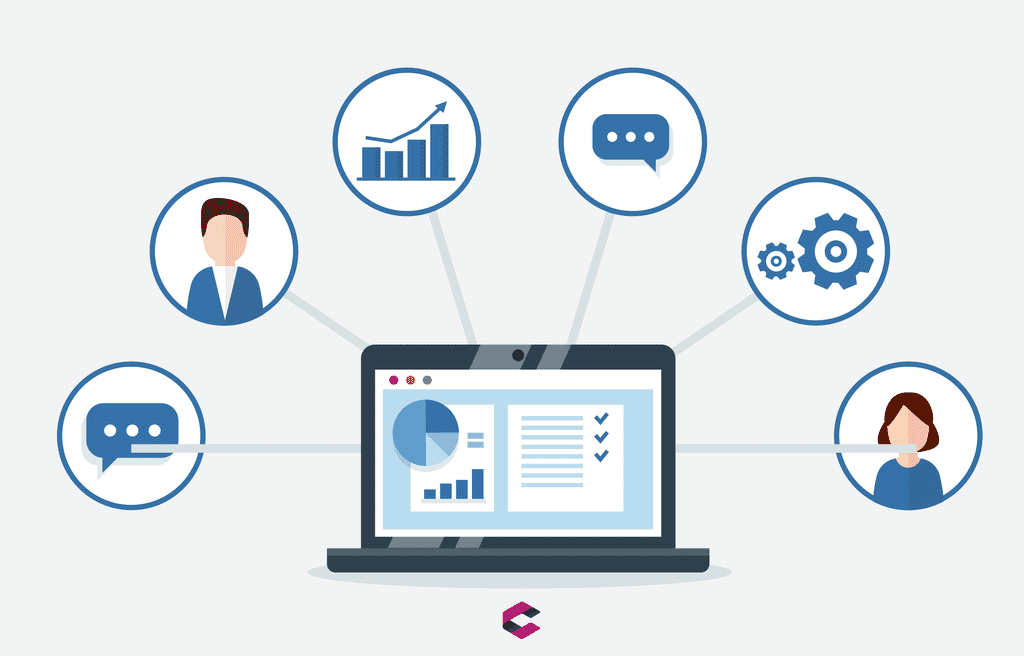
Rather than simply being another software platform, a Single Source of Truth provides a trusted environment where teams can confidently access the latest approved information, helping organisations improve collaboration, reduce costly errors and make better business decisions.
We spoke with Lee Valentine, Business Solutions Specialist at Cadspec, to learn why implementing a Single Source of Truth is becoming an essential part of modern engineering and manufacturing businesses.
What is a Single Source of Truth?
Despite the name, a Single Source of Truth is not necessarily one piece of software.
“As I see it, a Single Source of Truth isn’t one specific platform,” explains Lee. “It’s a trusted, shared environment where everyone involved in a project can access the right information, at the right time, in the right place.”
The objective is simple. Everyone knows where to find the latest approved information, with appropriate permissions, revision control and complete visibility across projects. Instead of questioning whether a document is current, teams can work confidently knowing the information they’re using is accurate.
Why does a Single Source of Truth matter?
Business decisions are only as reliable as the information they’re based on.
When departments work from outdated files, duplicated documents or conflicting datasets, the consequences can include:
- Project delays
- Increased rework
- Poor collaboration
- Costly mistakes
- Slower decision-making
A Single Source of Truth helps eliminate these issues by ensuring everyone works from the same trusted information.
“It’s as much about trust as it is about technology,” says Lee. “People have confidence they’re making decisions using the latest and most accurate data.”
The result is faster responses, improved operational efficiency and significantly less business risk.
Modernising existing systems instead of replacing them
One common misconception is that implementing a Single Source of Truth means replacing every existing system.
In reality, many organisations already possess valuable historical data spread across legacy platforms.
Lee recalls working with a customer whose engineering information was distributed across multiple disconnected systems.
Rather than replacing everything, Cadspec helped modernise the way that data was structured, connected and accessed.
The outcome included:
- Reduced time spent searching for information
- Less duplication of data
- Fewer manual processes
- Improved productivity
- Greater confidence in day-to-day decision-making
By creating a unified approach around existing data, the customer retained the value of historic information while making it far easier to use across the business.
Technology isn’t the first challenge
Many organisations assume implementing a Single Source of Truth is primarily a technology project.
According to Lee, the biggest challenge is often understanding business processes first.
“Technology usually isn’t the starting point, process is.”
Before introducing any new system, organisations should understand:
- How information moves through the business
- Who owns each dataset
- How information is created and approved
- Where bottlenecks occur
- How revisions are managed
Only once these foundations are established can technology effectively support them.
Without clear ownership, governance and consistent standards, even the most advanced digital tools will struggle to deliver long-term value.
Improving collaboration across teams
Disconnected systems often lead to disconnected teams.
Engineering, manufacturing, procurement and project management departments may all hold slightly different versions of the same information, resulting in confusion and unnecessary delays.
A Single Source of Truth removes much of this uncertainty.
Instead of spending time confirming which version is correct, everyone works from the same approved data.
This becomes particularly valuable for organisations with multiple sites or remote teams, where cloud-based collaboration allows departments to work together in real time with confidence.
Building the right foundations
Maintaining an effective Single Source of Truth is about much more than selecting the right software.
Successful organisations establish clear rules around:
- Data ownership
- Approval workflows
- Revision control
- Information access
- Governance and standards
“When those foundations are in place,” Lee explains, “the technology becomes much more effective and the Single Source of Truth is far easier to maintain over time.”
Preparing for AI and future digital transformation
As businesses continue generating larger volumes of engineering and operational data, the importance of trusted information will only increase.
A well-managed Single Source of Truth creates the structured data foundation required for technologies such as automation, machine learning and artificial intelligence.
Reliable data enables organisations to move beyond simply storing information towards:
- Automating routine processes
- Generating predictive insights
- Supporting faster strategic decisions
- Driving continuous improvement
In many ways, a strong Single Source of Truth becomes the backbone of wider digital transformation initiatives.
Where should organisations start?
For businesses considering their own Single Source of Truth strategy, Lee recommends beginning with an honest assessment of existing processes.
Identify where information becomes duplicated, delayed or lost, and understand the bottlenecks preventing teams from working efficiently.
Only then should organisations evaluate the technology needed to support those processes.
“A successful Single Source of Truth is built on clear ownership, good structure and a realistic understanding of how the business actually operates.”
By focusing on process before platform, businesses can create an environment where accurate information flows seamlessly across departments, enabling better collaboration, greater efficiency and more confident decision-making.
Ready to create your Single Source of Truth?
Whether you’re managing engineering data, improving collaboration or planning a wider digital transformation strategy, creating a trusted source of information is the first step towards making faster, smarter business decisions.
At Cadspec, we work with organisations to understand their existing processes before recommending solutions that connect people, data and technology. The result is a more efficient, collaborative and resilient business built on information you can trust.
Speak to our team today to discover how Cadspec can help you create a Single Source of Truth that supports your business today and prepares you for tomorrow.